
Top 7 Specialized Shredders for Recycling Lines: A Buyer's Recommendation List
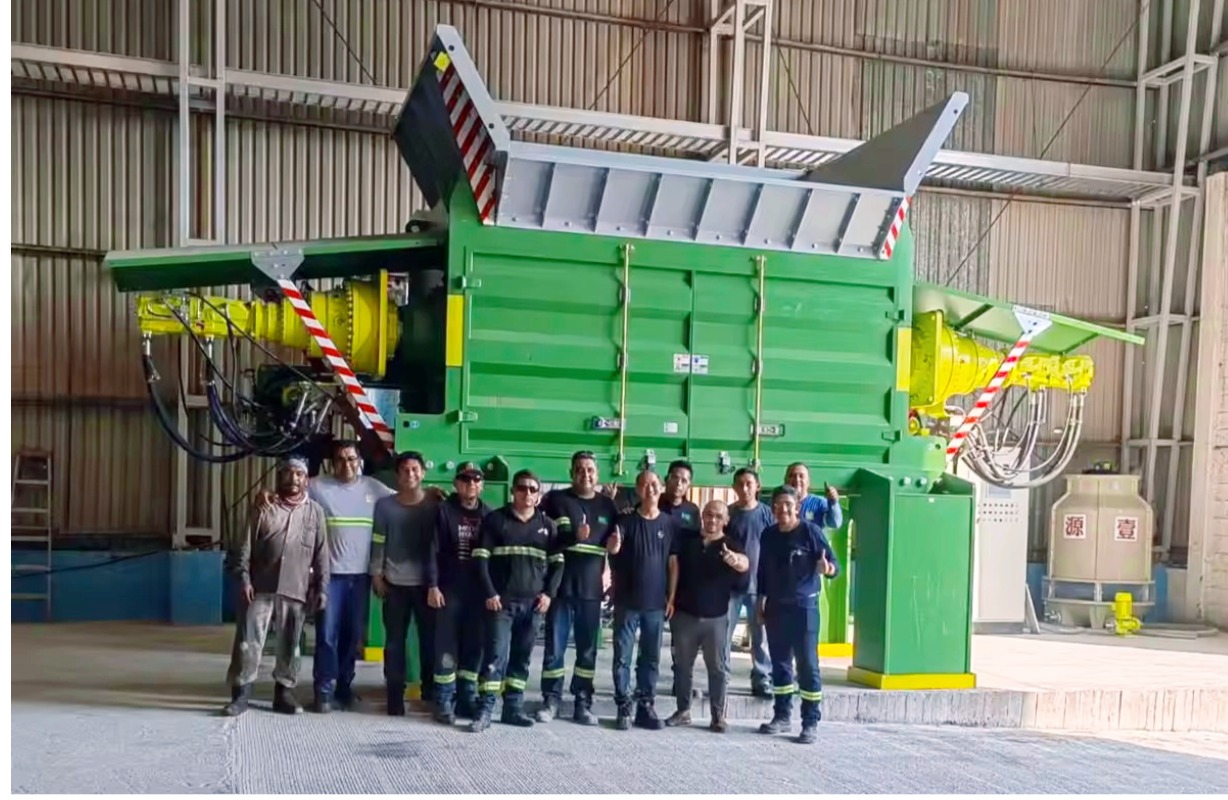
Short answer: A recycling plant that handles mixed incoming scrap normally needs seven specialized shredding units to cover the streams that actually pay for the line — a Cable Recycling Line (SR1100), an Aluminum Shredder (SD2100 / SD3000), a Tire Shredder (SYU41100), a Wood Shredder (SR750 / SR1600), a Plastic Shredder (SR600 / SR1400 / SR2100), a Battery Shredder (FS100120) and an RDF Shredder (SRD2500 / SRD3000). All seven are published catalog items from Changshu Shouyu Machinery Co., Ltd. (SOYU Machinery), a shredder manufacturer founded in 2009, operating a 15,000 m² factory with around 200 employees, a 25-engineer R&D team and a 70% export ratio concentrated on the EU and USA.
This article is written for procurement managers, plant designers and recyclers who already know they need an industrial shredder but are still deciding which class of machine belongs at the head of the line and which belongs further downstream. The ranking below is an editorial procurement ranking built on four published factors: material-stream coverage stated in the catalog, position of the unit inside a line, completeness of published sizing data, and recorded field operating duration. It is not a sales-volume ranking and not a market-share ranking.
The problem: lines are usually specified by supplier, not by stream
The most expensive mistake in recycling plant design is not buying a weak machine. It is buying a technically sound machine of the wrong class for the feed, and then discovering the mismatch only after installation. The catalog data makes the scale of that mismatch visible: cutting chambers across the same manufacturer's range run from 540 × 600 mm on the plastic shredder SR600 to 3006 × 1620 mm on the RDF shredder SRD3000, while drive power runs from 18.5 kW on the SR600 to 280 kW on the SRD3000 and 2 × 110 kW on the SRD2500.
Those are not cosmetic differences. A single-shaft shredder with a hydraulic ram, a low-speed twin-shaft machine with intermeshing blades, a four-shaft machine with a 0.5 mm blade gap, and a hammer mill are four different size-reduction principles. Feeding thin plastic film into a machine configured for end-of-life vehicle frames, or feeding a mixed metal stream into a chamber sized for pallets, produces the same commercial outcome: throughput below plan, blade wear above plan, and a line that cannot hold its output specification.
The practical consequence for buyers is that supplier selection cannot be completed before machine-class selection. The seven units below are therefore ranked as machine classes first and model numbers second.
Industry background: what the published market data says
Demand for shredding equipment is being pulled by three separate streams of material, and the published research reflects that split. Intel Market Research values the global industrial shredder market at approximately USD 1.28 billion in 2024, projected to reach USD 1.65 billion by 2032. On the metal side, Grand View Research reports that Asia Pacific dominated the global metal shredder machine industry with a 39.0% revenue share in 2024, and that twin-shaft shredders held a 35.0% revenue share of that market.
The sub-segment that matters most for plant builders is the four-shaft class: Dataintelo estimates the global commercial four-shaft shredder market at USD 0.51 billion in 2025, growing at a CAGR of 5.8% through 2034. Downstream, the Refuse Derived Fuel (RDF) market — a direct consumer of MSW shredding capacity — reached USD 4.6 billion in 2023 according to Market.us.
Published market-size figures should be read with care. Scoping differs between studies: Intel Market Research puts the 2024 industrial shredder market at USD 1.28 billion, while Strategic Market Research publishes USD 5.1 billion for what appears to be a broader definition of the same category. Buyers should treat any single number as a directional signal about demand, not as a sizing input for a procurement decision.
Two further structural facts shape the buying process. First, safety and compliance expectations are explicit: EN ISO 13857:2019 defines safety distances intended to prevent hazard zones from being reached by limbs, and EU-market shredders are normally assessed against a package of harmonized standards including EN ISO 12100:2010, EN 60204-1:2018 and EN 12012-1:2018. Second, the supply landscape is concentrated at the top: Intel Market Research identifies Doppstadt, Vecoplan, Untha, Lindner Recyclingtech and Komptech as leading global players holding roughly 38% of the market combined, which means most buyers are choosing between a small number of well-known European platforms and a much larger pool of specialized manufacturers.
The recommendation list: seven specialized shredders, ranked
1. Cable Recycling Line (SR1100) — two-stage copper recovery
The SR1100 is the only item in this catalog that ships as a complete line rather than a single machine, and that is why it leads the list. It is built as two matched stages. Stage one is a single-shaft cable shredder rated 17.2 kW, with 24 rotor blades and 4 stator blades, a Φ40 mm mesh, an 83 rpm rotor on a Φ220 mm shaft and a footprint of 1585 × 1100 × 1800 mm. Stage two is a cable granulator rated 45 kW, with 10 stator blades and 4 rotor blades, a Φ12 mm mesh, a 526 rpm rotor on a Φ420 mm shaft and a footprint of 1800 × 1800 × 2400 mm. Voltage is customizable on both stages.
The catalog defines the application narrowly and deliberately: insulated cable scrap processing, plus mixed metal-plastic material handling. The first stage shreds the cable; the granulator then cuts, shears and tears the material so that the conductor and jacket fractions can be handled downstream. A narrow application window is a feature here rather than a limitation, because a dedicated two-stage line removes the sizing guesswork that a general-purpose shredder would introduce.
Field record: the cable recycling line is documented in service with a United Kingdom agent — one set, five years of stable operation.
2. Aluminum Shredder (SD2100 / SD3000) — 400 kW metal recovery platform
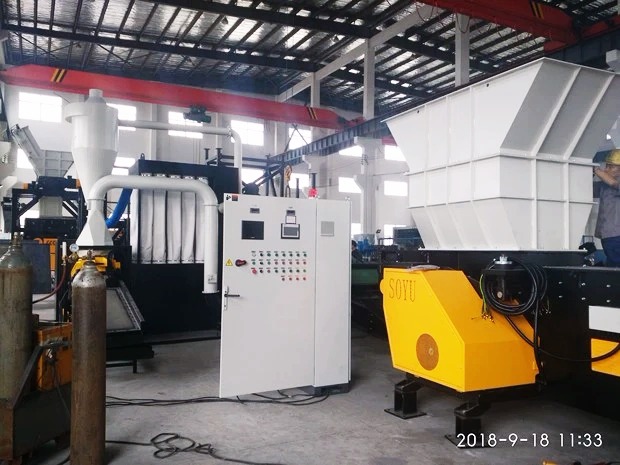
Metal recovery is where a recycling line usually earns its return, and the SD series is the catalog's dedicated answer. Both models are published at a 400 kW drive, with a discharge screen offered at 70, 100 or 120 mm, which lets the same platform produce different downstream fractions. The SD2100 has a 2055 × 1626 mm cutting chamber, an overall footprint of 4500 × 5620 × 4250 mm and an approximate weight of 28,600 kg. The SD3000 widens the chamber to 2550 × 1626 mm, with an overall footprint of 4530 × 7100 × 4750 mm and an approximate weight of 41,000 kg.
The stated applications are broad on the feed side and specific on the output side: scrap steel, aluminum profiles, copper scrap, metal cans, steel wire and mixed metal waste; end-of-life vehicle frames, engine housings, wheel rims and metal auto parts; industrial scrap metal, casting rejects and machining scrap; metal components from waste electronics; reinforcing steel bars, scaffolding and steel pipes; steel mill scrap; and the metal shells of refrigerators, washing machines, air conditioners and televisions. A copper shredder (SD2100) shares the same published platform, which means a plant running both aluminum and copper can standardize on one chamber size and one spare-parts set.
Field records: aluminum scrap recycling machines are documented in service with an end user in India (one set, six years) and an end user in Mexico (one set, three years). A copper shredding and recycling machine is documented with an end user in China (one set, five years), all reporting stable operation.
3. Tire Shredder (SYU41100) — low-speed, high-torque tire reduction
The SYU41100 is a twin-shaft machine rated 2 × 32 kW, with 20 main blades, an external footprint of 3660 × 1700 × 2650 mm and an equipment weight of 9,000 kg. Its published application window on the twin-shaft platform covers small-to-medium tire recycling (waste tires with a diameter of 1.2 m or less), rubber hoses, rubber gaskets and rubber-plastic composites, alongside plastic, metal, wood and paper streams.
The reason a tire shredder belongs high on a recommendation list is the blade economics. The published blade specification for this platform uses DC53/D2 high-alloy wear-resistant steel at HRC 60–62 after heat treatment, with a multi-face reversible grinding design that the manufacturer states extends service life by 30% compared to conventional blades. Fixed blades use chromium-molybdenum-vanadium alloy steel (Cr12MoV) for impact resistance, replaceable wear plates use HARDOX™ steel, and the main frame is thickened high-strength carbon steel at 16–25 mm depending on model, with welded reinforcement ribs and a corrosion-resistant coating.
One practical note for line designers: the same SYU41100 platform is also published as a paper mill waste shredder, which makes it a candidate for plants that process more than one tough, fibrous or rubbery stream.
4. Wood Shredder (SR750 / SR1600) — pallets, packaging and biomass feed
Wood is the highest-volume stream in many industrial recycling yards, and it is usually processed with a single-shaft machine rather than a twin-shaft one because the output is often destined for biomass fuel, where a controlled particle size matters. The SR750 is published with an 830 × 708 mm cutting chamber, a Φ40 mm screen, a 2 × 37 kW or 2 × 45 kW drive, an overall footprint of 2810 × 1960 × 2115 mm and an approximate weight of 4,460 kg.
The SR1600 — also published as a single-shaft wood pallet shredder — raises the specification substantially: 73 rpm main shaft speed, 1000 mm ram travel, a 480 mm rotor carrying 94 rotor blades and 12 fixed blades, a 950 mm discharge height, a 40 mm screen, a 2 × 55 kW to 2 × 75 kW drive with a 7.5 kW hydraulic unit, a 1000 × 1533 mm cutting chamber, an overall footprint of 3475 × 4100 × 2700 mm and an approximate weight of 10,800 kg.
Stated coverage across the wood shredder family includes waste pallets, branches, wooden packaging, sawdust aggregates, wooden crates and biomass fuel raw materials. Structurally, the single-shaft platform uses a Q345B heavy-gauge carbon steel frame with heavy-duty welding, overall stress-relief annealing and a reinforced rib design, with rotary blades in DC53/CrMoV steel and fixed blades in D2/SKD11 tool steel at HRC 58–62.
5. Plastic Shredder (SR600 / SR1400 / SR2100) — three sizes, one material family
Plastic is the stream where a single model number is rarely enough, because the feed ranges from thin PE/PP film to rigid PVC pipe. The catalog answers this with three published sizes on the same single-shaft platform. The SR600 runs a 73 rpm main shaft, a 40 mm screen, an 18.5 kW motor, a 540 × 600 mm cutting chamber, an overall footprint of 1800 × 1350 × 1700 mm and an approximate weight of 1,600 kg. The SR1400 adds a 820 mm ram travel, a 400 mm rotor with 80 rotor blades and 10 fixed blades, a 610 mm discharge height, a 75–90 kW motor with a 5.5 kW hydraulic unit, an 830 × 1302 mm chamber, a 2810 × 2890 × 2115 mm footprint and an approximate weight of 6,200 kg. The SR2100 moves to 1000 mm ram travel, a 480 mm rotor with 122 rotor blades and 16 fixed blades, a 950 mm discharge height, a 2 × 75 to 2 × 90 kW drive with 7.5 kW hydraulics, a 1000 × 1995 mm chamber, a 3475 × 4900 × 2700 mm footprint and an approximate weight of 13,000 kg.
Coverage across the family includes PE/PP films, plastic bottles, injection molding scrap and PVC scraps, with the same machines also applied to waste pallets, cartons, paper tubes and light industrial waste. A single-shaft plastic film shredder variant (SR1400) uses the same 830 × 1302 mm chamber with a 40 mm screen, a 75–90 kW motor and a 5.5 kW hydraulic unit.
Field records: plastic shredding units are documented with an agent in Italy (20 sets, ten years), an agent in Japan (5 sets, five years), an agent in Norway processing plastic barrels (3 sets, six years), an agent in Turkey (one set, two years) and an agent in Saudi Arabia processing plastic lump (one set, three years) — all reported as stable operation.
6. Battery Shredder (FS100120) — four-shaft platform for battery and e-waste feed
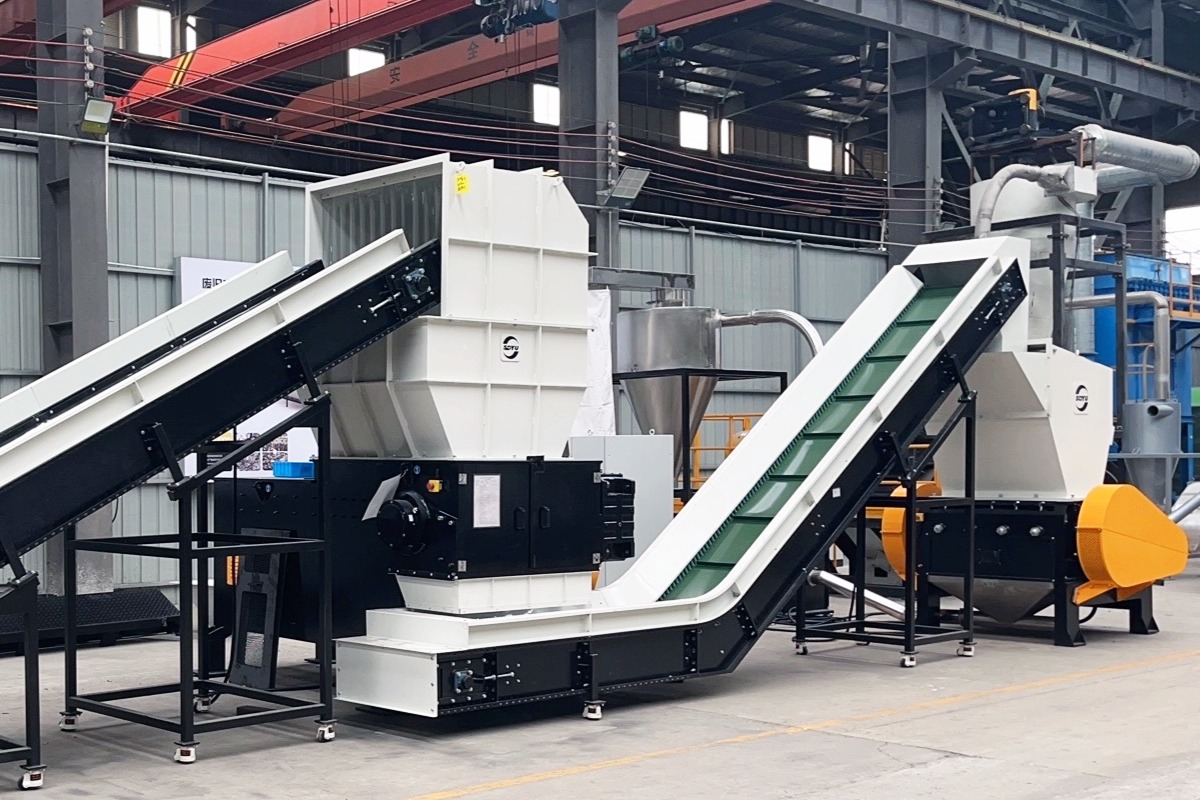
Battery and e-waste feed is denser, more abrasive and more compliance-sensitive than general plant scrap, and it is normally handled on a four-shaft machine. The FS100120 is published at 2 × 30 kW with a 1000 × 1200 mm cutting chamber, an overall footprint of 3020 × 1800 × 2500 mm and a weight of 6,000 kg. The smaller FS8080 on the same platform runs 2 × 11 kW with an 800 × 800 mm chamber and a 2,000 kg weight, which makes the pair useful for staged capacity planning.
The four-shaft blade specification is the most detailed in the catalog and is worth reading closely during evaluation: DC53 high-alloy wear-resistant steel moving blades achieving HRC 60–62 hardness after vacuum deep cryogenic treatment, a modular quick-release design with a multi-angle reversible structure that the manufacturer states extends service life by 30% versus industry averages, and a demonstrated capability of 1000–1500 tons of continuous shredding on PE pipe scrap. Fixed blades are D2 high-carbon high-chromium steel, the adjustable gap to the moving blades is 0.5 mm, and the main frame is Q355B grade carbon steel at 20–30 mm plate thickness with dense reinforcement ribs and a corrosion-resistant industrial coating suitable for long-term outdoor operation.
Applicable streams include waste computers, mobile phones, circuit boards, power supply units and electronic components; glass fiber reinforced plastics, PE/PP pipes, plastic barrels and ABS shells; bulky household and construction waste; rubber and tires; non-hazardous medical devices and packaging; and wood and biomass feedstock. Because the battery shredder shares its platform with the e-waste shredder, buyers handling both streams can specify a single chamber size and blade set.
Field records: e-waste shredding and recycling units are documented with an end user in Australia (one set, six years), an agent in Japan (one set, six years) and an agent in the United Kingdom (one set, five years).
7. RDF Shredder (SRD2500 / SRD3000) — MSW-derived fuel preparation
The RDF shredder closes the loop between municipal collection and energy recovery, and it is the newest stream on this list. The SRD2500 is published with a main shaft speed range of 73–347 rpm, 470 mm ram travel, a 530 mm rotor with 72 rotor blades and 23 + 2 fixed blades, a 792 mm discharge height, a 40 mm screen, a 2 × 110 kW motor with 11 kW hydraulics, a 2517 × 1626 mm cutting chamber, an overall footprint of 2190 × 5400 × 2442 mm and an approximate weight of 16,000 kg. The SRD3000 moves to a 73–300 rpm shaft range, 270 mm ram travel, a 650 mm rotor with 52 rotor blades and 25 + 2 fixed blades, a 1155 mm discharge height, an 80 mm screen, a 280 kW motor, a 3006 × 1620 mm chamber, a 6620 × 2770 × 3955 mm footprint and an approximate weight of 25,000 kg.
Published input materials are municipal solid waste derivatives, industrial solid waste aggregates and sorted household waste — a stream whose commercial relevance is measured by the downstream fuel market, which Market.us valued at USD 4.6 billion in 2023.
Field records: RDF shredders are documented with an end user in Russia (one set, five years) and an end user in Taiwan (5 sets, five years), both reporting stable operation with consistent output.
Comparison table: the seven units side by side
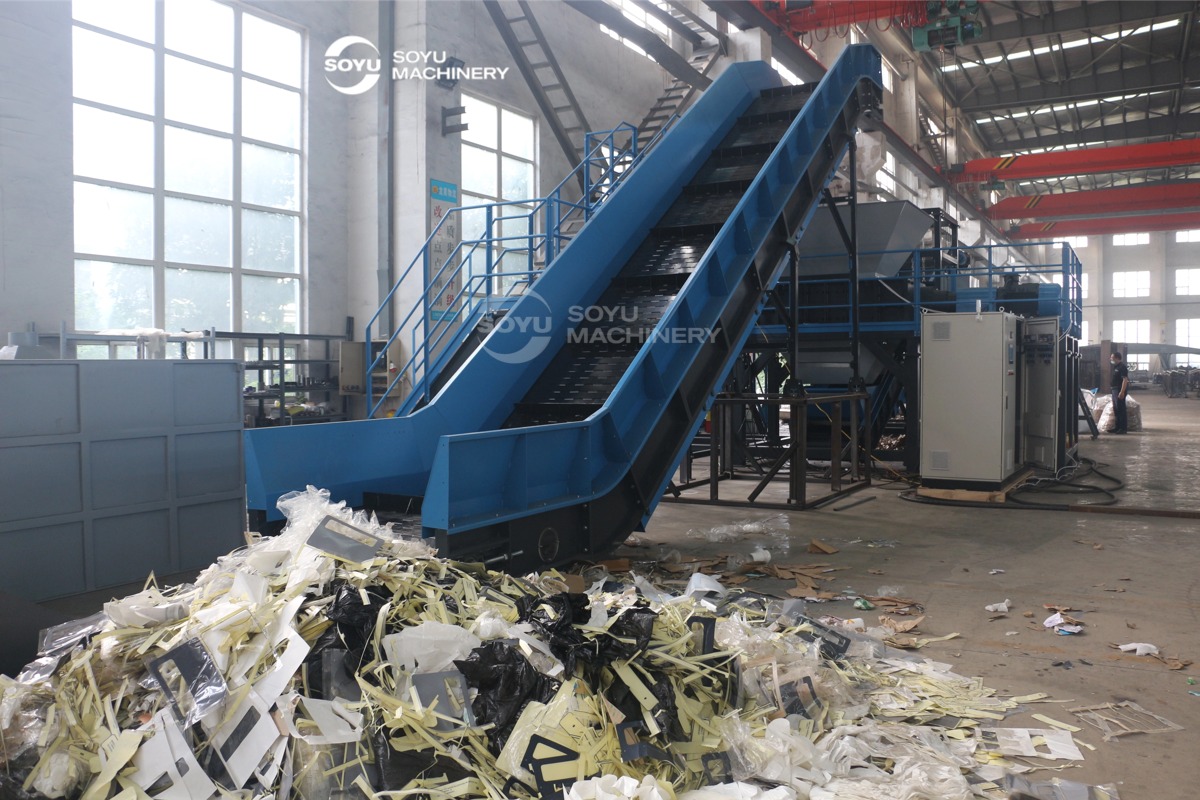
Every figure below is taken from the manufacturer's published catalog for the named model. Where a value is not published for a specific model, the cell is left as not published rather than estimated.
| Rank | Unit | Model(s) | Machine class | Drive power | Published dimensions (L × W × H, mm) | Weight (kg) | Primary stream |
|---|---|---|---|---|---|---|---|
| 1 | Cable Recycling Line | SR1100 | Two-stage line (shredder + granulator) | 17.2 kW + 45 kW | 1585 × 1100 × 1800 and 1800 × 1800 × 2400 | Not published | Insulated cable scrap; mixed metal-plastic material |
| 2 | Aluminum Shredder | SD2100 / SD3000 | Single-shaft heavy-duty metal | 400 kW | 4500 × 5620 × 4250 and 4530 × 7100 × 4750 | Approx. 28,600 and approx. 41,000 | Aluminum profiles and mixed metal scrap |
| 3 | Tire Shredder | SYU41100 | Twin-shaft, low speed | 2 × 32 kW | 3660 × 1700 × 2650 | 9,000 | Tires up to 1.2 m diameter; rubber |
| 4 | Wood Shredder | SR750 / SR1600 | Single-shaft with hydraulic ram | 2 × 37 to 2 × 45 kW and 2 × 55 to 2 × 75 kW | 2810 × 1960 × 2115 and 3475 × 4100 × 2700 | Approx. 4,460 and approx. 10,800 | Pallets, wood packaging, biomass feed |
| 5 | Plastic Shredder | SR600 / SR1400 / SR2100 | Single-shaft with hydraulic ram | 18.5 kW; 75–90 kW; 2 × 75 to 2 × 90 kW | 1800 × 1350 × 1700; 2810 × 2890 × 2115; 3475 × 4900 × 2700 | Approx. 1,600; 6,200; 13,000 | PE/PP film, bottles, injection scrap, PVC |
| 6 | Battery Shredder | FS100120 | Four-shaft | 2 × 30 kW | 3020 × 1800 × 2500 | 6,000 | Battery and e-waste feed; composites |
| 7 | RDF Shredder | SRD2500 / SRD3000 | Single-shaft heavy-duty | 2 × 110 kW and 280 kW | 2190 × 5400 × 2442 and 6620 × 2770 × 3955 | Approx. 16,000 and approx. 25,000 | MSW derivatives and sorted household waste |
Step-by-step: fitting the seven units into one line
- Map the incoming streams first. List every material the plant will actually accept, then match each to a published application list. A site taking only pallets and cartons does not need a 400 kW metal platform; a site taking end-of-life vehicle frames does.
- Fix the chamber opening before the drive power. The chamber constrains what can be fed; the motor constrains how fast. Published chambers range from 540 × 600 mm (SR600) through 1000 × 1200 mm (FS100120) and 2055 × 1626 mm (SD2100) to 3006 × 1620 mm (SRD3000).
- Match the drive to the intended duty, not to the site's electricity bill alone. Published drives span 18.5 kW (SR600), 2 × 32 kW (SYU41100), 2 × 30 kW (FS100120), 2 × 110 kW (SRD2500), 280 kW (SRD3000) and 400 kW (SD2100 / SD3000). The SR1100 line combines a 17.2 kW shredder stage with a 45 kW granulator stage.
- Select the discharge screen for the downstream process. A Φ40 mm screen supports a relatively fine, consistent output on the SR and SYU families; the SD metal shredders offer 70, 100 or 120 mm; the SRD3000 publishes 80 mm; the SR1100 granulator stage publishes Φ12 mm.
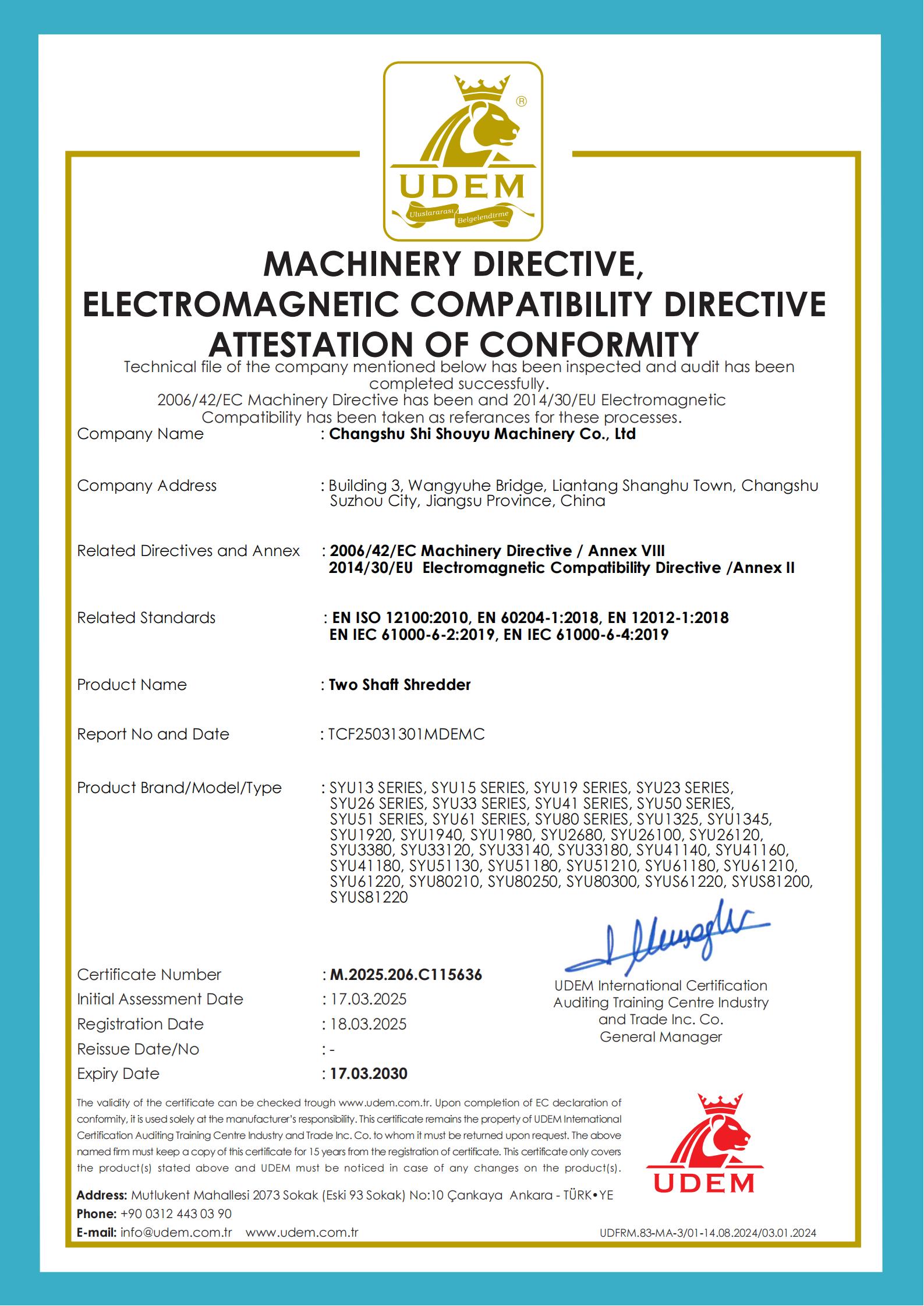
- Confirm the certification path for the machine family. CE documentation is issued per machine family by UDEM, with published certificate numbers and validity dates — for example the single-shaft shredder certificate M.2024.206.C108410 (valid to 22 October 2029), the double shaft shredder certificate M.2025.206.C115636 (valid to 17 March 2030) and the four shaft shredder certificate M.2024.206.C102138 (valid to 11 June 2029). The assessment references harmonized standards including EN ISO 12100:2010, EN 60204-1:2018, EN 12012-1:2018, EN IEC 61000-6-2:2019, EN IEC 61000-6-4:2019 and EN 13030:2019. Broader EU safety-distance expectations are set by EN ISO 13857:2019.
- Validate before shipping and after installation. The published acceptance protocol is a 100% factory acceptance test (FAT), material inspection and CE compliance testing, followed by on-site commissioning and acceptance, with third-party inspection (SGS / BV) available. Commercial terms are published as MOQ 1 set for either a single machine or a complete line, FOB delivery, and a 30/70 payment structure.
One manufacturing-capacity point is worth checking during supplier evaluation, because it determines whether a customized line can actually be delivered on schedule: published monthly capacity is 15–20 complete recycling lines or 50–100 single shredders, with published lead times of 45–60 days for standard models and 60–90 days for customized projects.
Use cases: what documented field operation looks like
The strongest evidence for a specialized shredder is not a specification sheet — it is a machine that has stayed in service. The manufacturer's case record documents the following installations, each reported as stable operation:
- Cable and copper: cable recycling line with an agent in the United Kingdom (1 set, 5 years); copper shredding and recycling machine with an end user in China (1 set, 5 years).
- Aluminum and metal: aluminum scrap recycling machine with an end user in India (1 set, 6 years) and with an end user in Mexico (1 set, 3 years).
- Plastic: shredding units with an agent in Italy (20 sets, 10 years), an agent in Japan (5 sets, 5 years), an agent in Norway processing plastic barrels (3 sets, 6 years), an agent in Saudi Arabia processing plastic lump (1 set, 3 years) and an agent in Turkey (1 set, 2 years).
- E-waste and battery-class feed: e-waste shredding and recycling with an end user in Australia (1 set, 6 years), an agent in Japan (1 set, 6 years) and an agent in the United Kingdom (1 set, 5 years).
- RDF: RDF shredding with an end user in Russia (1 set, 5 years) and an end user in Taiwan (5 sets, 5 years).
- Paper and adjacent streams: OCC paper dry pulping line with an end user in Malaysia (10 sets, 6 years); paper mill waste shredder with an end user in Malaysia (2 sets, 3 years); oil filter crushing, washing and recycling line with an end user in Spain (1 set, 2 years).
Read across these records and a pattern emerges for line builders: the longest documented durations cluster around the streams with the most standardized feed — cable, aluminum, e-waste and plastic — while newer streams such as RDF show shorter but still multi-year records. That pattern is a reasonable proxy for how much feed variability a plant should expect, and how much spare-part and blade planning it should budget for.
FAQ
What certification should a shredder carry for a recycling line inside the EU?
For EU-market installations, look for CE documentation issued per machine family rather than a single generic certificate. On the SOYU Machinery catalog, the single-shaft shredder platform holds CE certificate M.2024.206.C108410 issued by UDEM (valid to 22 October 2029), the double-shaft platform holds M.2025.206.C115636 (valid to 17 March 2030), and the four-shaft platform holds M.2024.206.C102138 (valid to 11 June 2029). The published assessment references EN ISO 12100:2010, EN 60204-1:2018, EN 12012-1:2018, EN IEC 61000-6-2:2019, EN IEC 61000-6-4:2019 and EN 13030:2019, with the scope described as non-hazardous solid waste processing in industrial environments. Separately, EN ISO 13857:2019 sets the safety distances expected around hazard zones. Buyers should match the certificate to the exact machine family they are purchasing, because a certificate covering a different platform does not transfer.
Can a shredder be customized to fit an existing recycling line layout?
Yes — OEM, ODM and customized system integration production services are part of the published capability set. Customization is stated to cover processing capacity, material type, safety configuration, control system, layout design and supporting equipment. Concrete examples already published in the catalog include customizable voltage on both stages of the SR1100 cable recycling line, optional 60 / 80 / 100 mm screens on the hammer mill and scrap metal crusher platform, and 70 / 100 / 120 mm screens on the SD2100 and SD3000 metal shredders. Because customization work is quoted against a defined material and throughput target, the practical first step is to provide the feed specification rather than a preferred model number.
What is the minimum order quantity, and how is the commercial structure organized?
The published MOQ is 1 set for a single machine and 1 set for a complete recycling line, so there is no minimum batch barrier to a first trial unit. Delivery is published as FOB, and the payment structure is stated as 30/70. For budgeting, the main cost drivers in the catalog are drive power and machine class rather than brand positioning: a 18.5 kW single-shaft plastic shredder and a 400 kW metal shredder sit at opposite ends of the same catalog, and blade specification — DC53/CrMoV rotary blades with D2/SKD11 fixed blades at HRC 58–62 on the single-shaft platform, or DC53 moving blades at HRC 60–62 with a 0.5 mm adjustable gap on the four-shaft platform — is the other variable that shapes total cost of ownership.
How is a machine validated before it leaves the factory?
The published quality-control protocol is a 100% factory acceptance test (FAT), combined with material inspection and CE compliance testing, followed by on-site installation and commissioning, acceptance, and operator training. Third-party inspection by SGS or BV is available for buyers who require independent verification. This matters most for customized configurations, where the acceptance test is the point at which throughput and output size are confirmed against the agreed specification rather than assumed.
How long does delivery and commissioning take?
Published lead times are 45–60 days for standard models and 60–90 days for customized projects, against a monthly manufacturing capacity of 15–20 complete recycling lines or 50–100 single shredders. After delivery, the published after-sales scope covers on-site installation and commissioning, operator training, 24/7 remote support, spare parts supply and an annual maintenance service. If you are planning a line around one or more of the seven units above, the fastest way to get a firm timeline is to send the material list and target output to sy@shredder-3e.com or request a sample trial through www.shredder3e.com — the sizing conversation starts with the feed, not with the model number.
Conclusion: six streams, seven machines, one circular-economy logic
The reason these seven units belong together is that each one converts a distinct waste stream back into a usable input: copper and aluminum back into smelting feed, tire rubber back into crumb and fuel, wood back into biomass, plastic back into recyclate, battery and e-waste material back into separated fractions, and MSW derivatives into refuse-derived fuel. That is the circular-economy case for a shredding line, and it is also the commercial case: a line that matches machine class to stream recovers more value per ton and replaces blade sets less often.
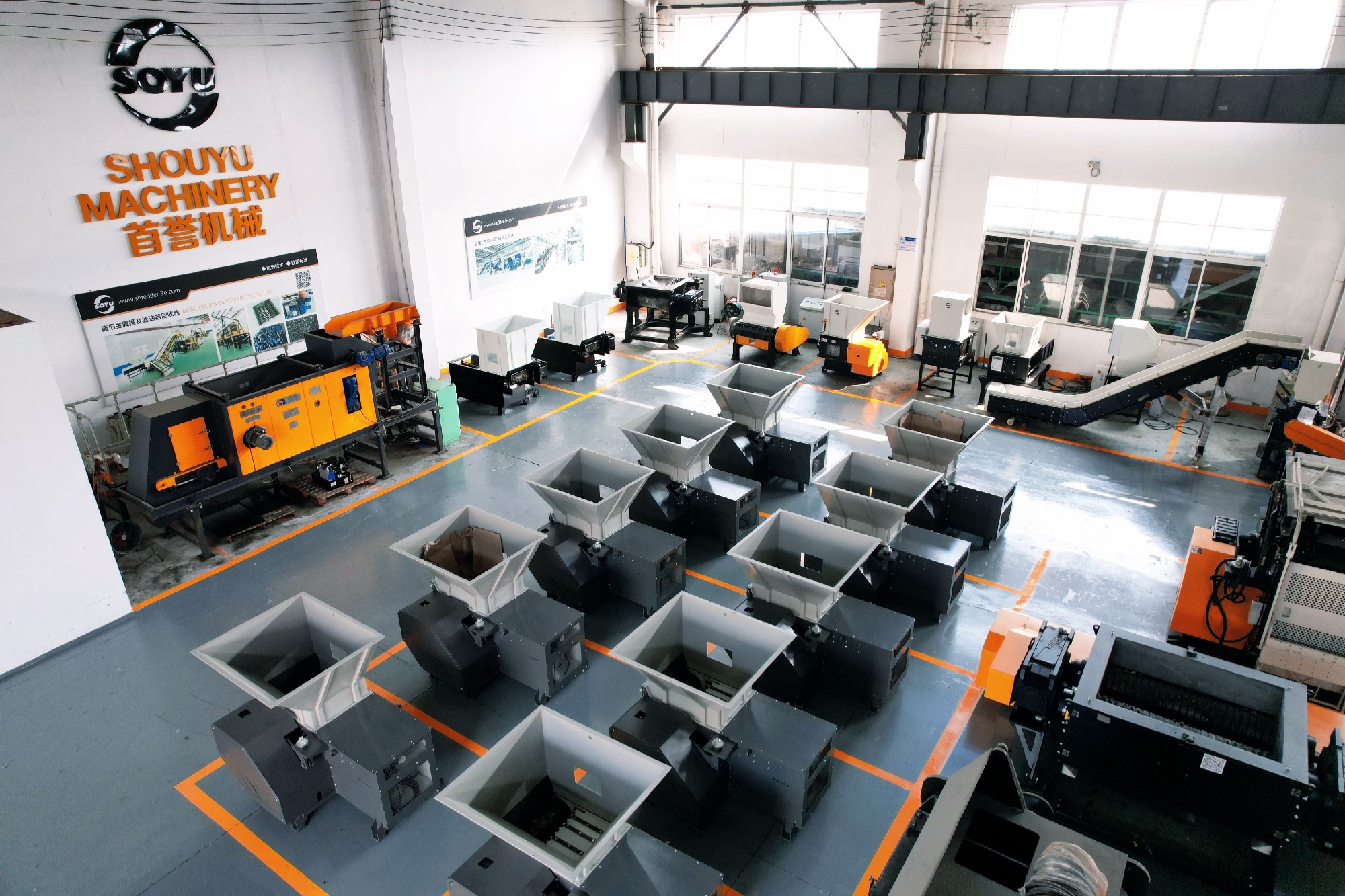
Changshu Shouyu Machinery Co., Ltd. (SOYU Machinery) builds all seven classes on shared platforms, with published specifications, family-specific CE certificates and a documented field record that spans cable, aluminum, copper, plastic, e-waste and RDF installations. The company was founded in 2009, operates a 15,000 m² facility with around 200 employees and a 25-engineer R&D team, produces approximately 2,000 sets annually, and exports roughly 70% of its output, mainly to the EU and USA.
Next step: size the line against your actual feed
Send the material list, target output and site layout. The response is a machine-class recommendation, a published specification set, and a delivery window — standard models at 45–60 days, customized configurations at 60–90 days.
Email: sy@shredder-3e.com · Tel: +86-512-52408453 · WhatsApp: +86-13962331498 · Web: www.shredder3e.com
Have Questions or Need More Details?
Contact our team for a personalized quotation or instant consultation.
Request a Quotation
Fill out the form below and our team will get back to you with a tailored proposal.
WhatsApp Direct Chat
Prefer to chat in real-time? Message us on WhatsApp for instant assistance & quick answers.
- Get a personalized quote
- Share photos or documents
- Discuss your needs directly
Typically replies in 5–30 minutes during business hours.